

 What Staffing Services Need to Know for 2026: Trends, Challenges & Opportunities
The workforce landscape continues to evolve — and 2026 will reward staffing firms that move faster, stay compliant, and use smarter tools to deliver talent efficiently.
As employers plan for 2026, one thing is clear: workforce strategy is now a business strategy. Staffing services that embrace technology, strengthen compliance, and keep relationships at the center will stand out in a more competitive market.
Here are the key staffing insights to know going into 2026:
1) AI Is No Longer Optional — It’s a Competitive Advantage
By 2026, AI-powered hiring tools will have become a standard part of staffing operations. From screening and sourcing to candidate matching and workflow automation, staffing firms that use AI responsibly can move faster and improve placement accuracy.
What staffing companies should do now: 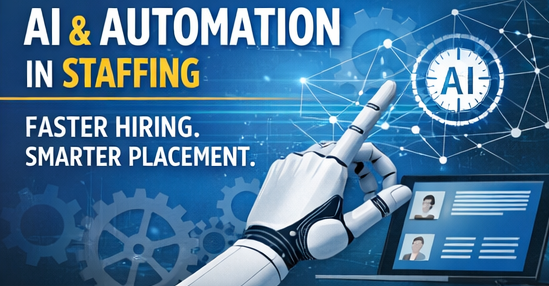
- Use AI and automation to reduce time-to-fill
- Improve candidate matching through structured skills profiles
- Automate follow-up sequences (text/email) while keeping human touchpoints
- Stay transparent and ethical about how tools are used
Big takeaway: Speed matters in 2026 — and “manual recruiting” won’t scale.
2) Skills-Based Hiring Will Continue to Replace “Resume-Only” Hiring
Employers are shifting away from traditional credential-based hiring and toward skills-first hiring — especially in construction, industrial, logistics, and hands-on roles.
Staffing firms that build accurate skills inventories and validate candidate readiness will win more accounts and improve retention.
Staffing advantage:
When staffing firms move beyond resumes and evaluate skills, reliability, certifications, and jobsite readiness — they become a workforce partner, not just a vendor.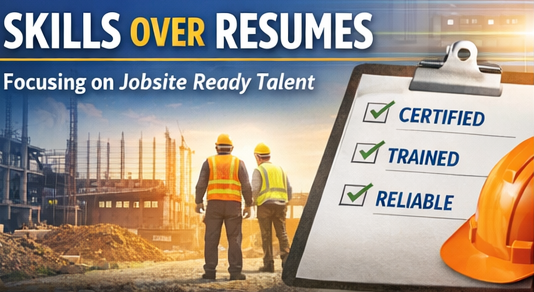
3) Construction Labor Gaps Are Still Growing — and Will Drive Demand
The construction industry continues to face structural labor shortages, with forecasts showing that hundreds of thousands of new workers will be needed to meet demand and replace retirees. This challenge will intensify in 2026.
That means staffing firms supporting construction should prepare for: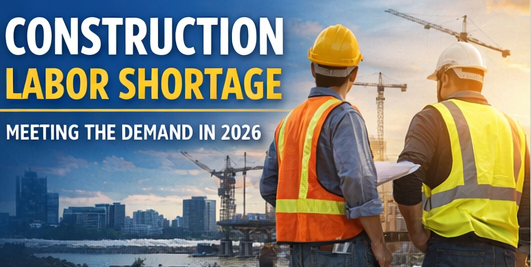
- higher competition for skilled labor
- faster jobsite turnarounds
- increased demand for dependable, safety-ready workers
- a stronger emphasis on retention and reliability
Staffing firms that can deliver consistent people and build trust with contractors — will thrive.
4) Compliance and Pay Rules Will Continue to Matter More
Regulatory and wage-related changes continue to reshape how employers classify workers and manage overtime. Staffing firms must stay compliant and proactively educate clients on wage-and-hour standards and classification risks.
Staffing firms should strengthen in 2026:
- worker classification review processes
- overtime and exempt/non-exempt policy clarity
- accurate job descriptions and documentation
- proper payroll and reporting processes
Being “compliance-strong” makes you more valuable to clients and protects long-term relationships.
5) Customer Development Will Matter Just as Much as Recruiting
In 2026, many staffing firms will focus heavily on recruitment — but the winners will also build stronger client development and community relationships.
The strongest staffing brands will be the ones that:
- show up consistently in local industry groups
- build long-term partnerships with contractors and plant managers

- act as a trusted workforce advisor — not a transactional vendor

This is especially true in regional markets like the Southeast, where industrial activity remains strong.
Relationships + responsiveness are still the #1 differentiator.
6) Employers Expect Staffing Firms to Be More “Tech-Enabled”
Clients increasingly expect staffing partners to offer visibility and structure:
- pipeline reporting
- workforce tracking
- reliable communication
- candidate updates
- performance follow-ups
Many workforce providers are leaning into stronger systems like CRM tracking, contingent workforce solutions, and more advanced scheduling tools. Anserteam+1
2026 is the year to modernize your process — not just your marketing.
Final Thoughts: The Staffing Firms That Win in 2026 Will Be the Ones That Combine Technology + Trust
The staffing companies that grow in 2026 will share the same advantages:
- faster time-to-fill
- better candidate matching
- stronger compliance systems
- consistent follow-up
- dependable jobsite-ready workforce
- community presence and client trust
In a changing workforce economy, staffing isn’t just about filling positions — it’s about creating stability for employers and opportunity for workers.
Need to Strengthen Your 2026 Workforce Strategy?
At Elevate Workforce, we help construction, marine, manufacturing, and industrial employers build reliable teams through workforce solutions built on speed, service, and accountability.
Contact us today to plan your hiring needs for 2026.